
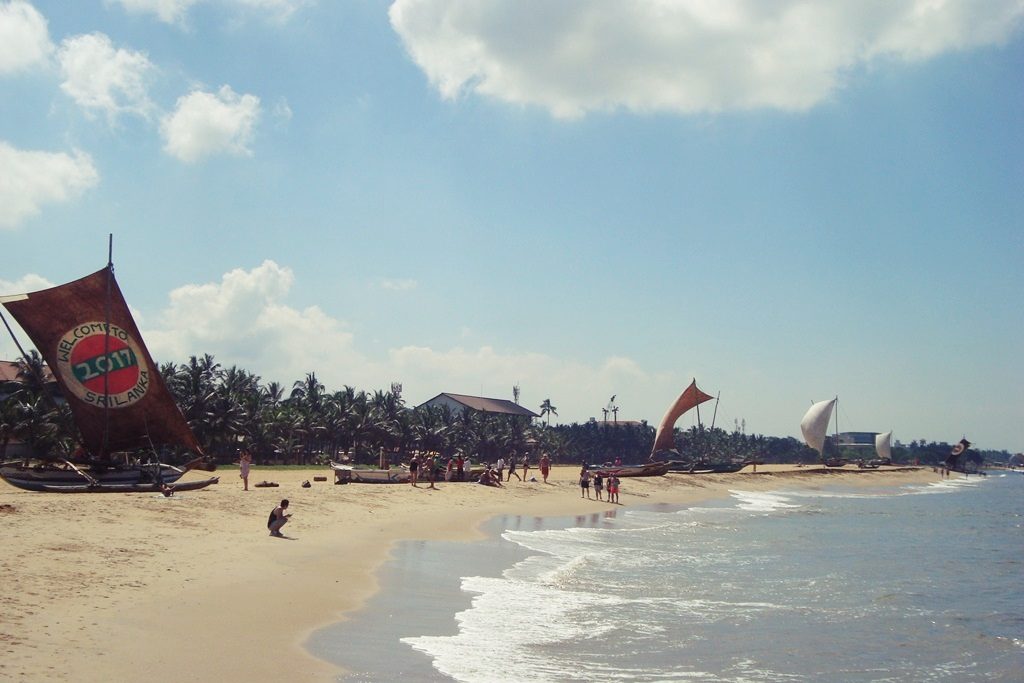
Not too far away from Colombo, lies Negombo a rather underrated coastal paradise, that has a history which most are unaware of. The legacy of the colonizers, the Portuguese, the Dutch and the British still remain to date.
The legacy of the Colonizers:
- The Portuguese: The Negombo port was a rather important port in the island when conducting foreign trade, way before the Portuguese arrived in the island. Negombo was famous for cinnamon cultivations and was quite an important center in the moorish trade, until it was seized by the Portuguese, who went on to build a small Fort there.
- The Dutch : The structure of the Portuguese was rather weak and was subsequently captured by the Dutch. The Dutch Fort of Negombo follows Colombo,Jaffna, and Galle and is known to be an important symbol of the Dutch authority in the West Coast. Though the port and the fort were constantly renovated by its captors, the interest declined after the collapse of cinnamon trade.
- The British: After the Dutch, the British took down the now purposeless Fort, and built a jail there instead. It is said that the entrance to the Fort was a drawbridge surrounded by moats for optimal protection. Only the ruins of the old fort welcomes one today. The looming clock tower, a remnant of Queen Victoria’s silver jubilee welcomes the eyes of the curious traveler.
-
- Its People
Most of the residents of Negombo are Fernandos, Pereiras, Silvas or de Silvas. They themselves are remnants of the colonial times that added culture to the area. Most of Negombo’s people are Catholic. This is quite evident in the many churches that add to the city’s skyline.
-
- Architecture
Negombo is also termed as Little Rome due to its many catholic churches that reflects light off stained class and adds an undeniable beauty to the coastal city. The St. Mary’s church is a well known architectural landmark, built well over a century ago.
The St. Stephen’s Anglican Church in Negombo is one of the famous places of interest, renovated true to its Gothic style architecture. There still remains several houses that were erected during the Colonial times. The landside area of the town is a rather nostalgic representation of the colonial era. Some of the houses are strictly maintained by the owners in order to maintain the historic splendour.
-
- Fishing for a living
Negombo is famous for its fish. “Meegamu maalu” is a term that is used far an wide among the island’s residents. The fisherman tend to use traditional fishing gear, rafts and catamarans in order to fish in the lagoon as well as the deep sea. Negombo has its own fish market. Known to all as “lellama” the market offers the freshest fish in the area.
The wonders of this coastal paradise are hidden for the most part due to being a busy neighbourhood that is a part of the constant hustle bustly of the urban culture. However, if you care to step out of your routine and drive to Negombo, you’ll be quite surprised at the pleasures it holds for you, and the untold secrets of the colonial times that are dying to be told.